
Disclosure: This post may contain affiliate links where I earn a commission if you make a purchase through my links at no additional cost to you.
Rome is basically one giant open air archaeology museum, which is exactly why I love it and exactly why it can wreck you if you try to see everything in a day. These are the classic archaeological sites that are well known, heavily visited, and easy to spread across three to four days at a slow, comfortable pace. They’re the foundations of ancient Rome and the places every history lover should experience at least once.
The Colosseum
Built under Emperor Vespasian around 72 AD and finished by his son Titus in 80 AD, the Colosseum was Rome’s massive public arena for gladiator fights, staged hunts, and even the occasional staged naval battle. It was built right on top of Nero’s old artificial lake, drained and filled in as a very public “this land belongs to the people now” statement. The Flavian emperors were making a point: they were stable, they were legitimate, and they were absolutely not Nero.
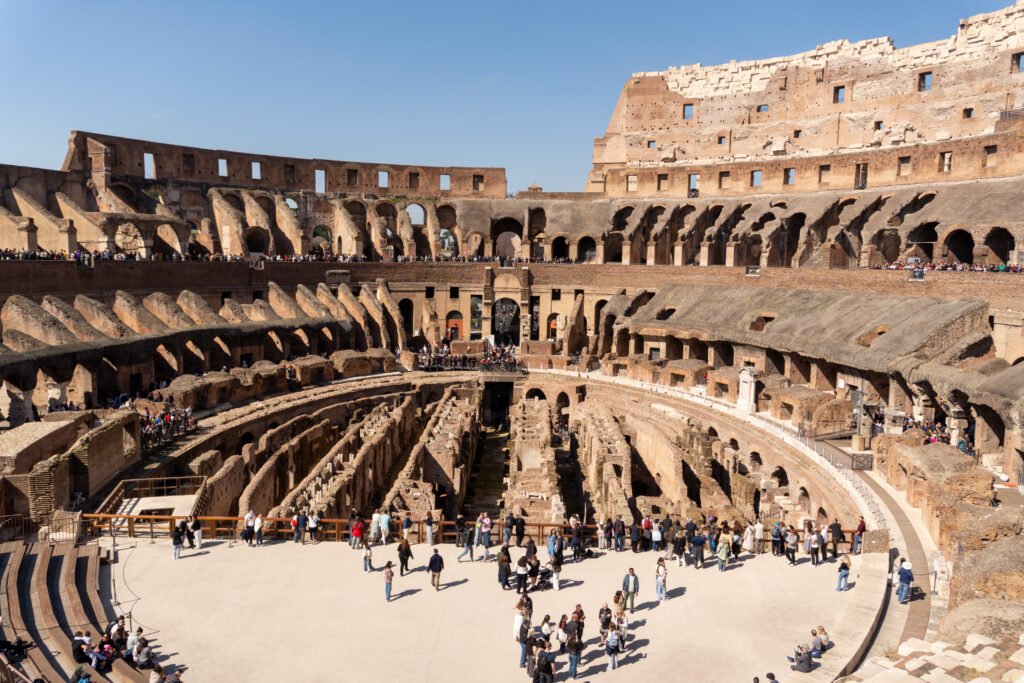
And the whole gladiator and wild animal thing? I cannot emotionally process that. You admire the engineering one second, and the next you remember this place hosted some of the most violent shows in history. Rome really said entertainment, but make it deeply traumatic.
I did the Colosseum as its own day. The tickets have timed entry, so I went in self‑guided and took my time. I didn’t have arena floor access since that is a different ticket, so I went straight up to the second floor museum instead. It was crowded, but amazing. You get a great view and there is actual graffiti carved into the stone seating from people who lived two thousand years ago. Probably kids being kids in the world’s most intense stadium.
Travel tip: Guided tours can be great if you want deeper context or someone to handle the logistics, but if you prefer moving at your own pace, you can rent an audio guide at the entrance for around seven euros. Otherwise there are plenty of excellent guided tours to choose from.
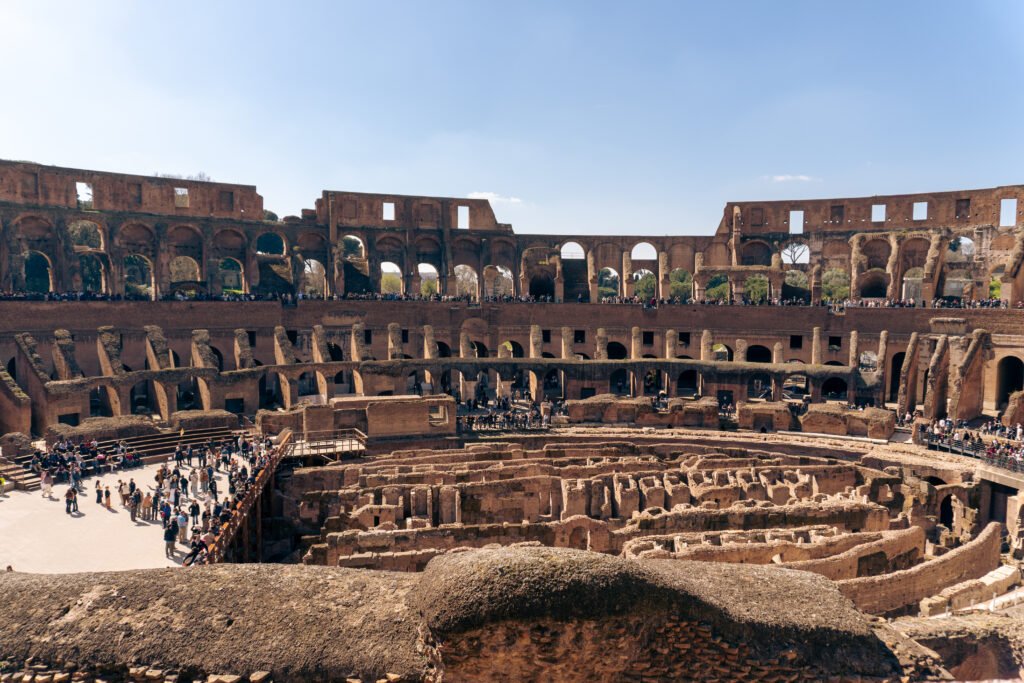
This time I booked Attic level tickets, which let you climb all the way up to the highest surviving tier. You usually need to book about a month in advance, but they are worth it. The stairs are steep and uneven, but I took them slowly. Up there the crowds thin out to almost nothing. At one point I was completely alone, looking down at the arena from the same height ancient Romans once did. It was calm, windy, and surreal.
By the time I finished my legs were done and I was starving. We grabbed lunch nearby and briefly considered squeezing in the Roman Forum since our ticket was valid for both. It was a bad idea though because the Forum closes at 4pm and we were already running out of energy. We decided to come back the next day, which was the better choice if you are traveling slowly.
Accessibility note: There is an elevator that takes you to the first and second levels, including the museum floor, but the attic level still requires stairs since the lift cannot reach the upper tiers.
The Roman Forum
We returned the next morning for the Forum, which was the political, religious, and commercial center of ancient Rome. This valley was once packed with temples, basilicas, meeting halls, and monuments that shaped daily life for everyone from senators to shopkeepers. Triumphs passed through here, laws were debated here, and the city’s most important rituals happened within these walls.
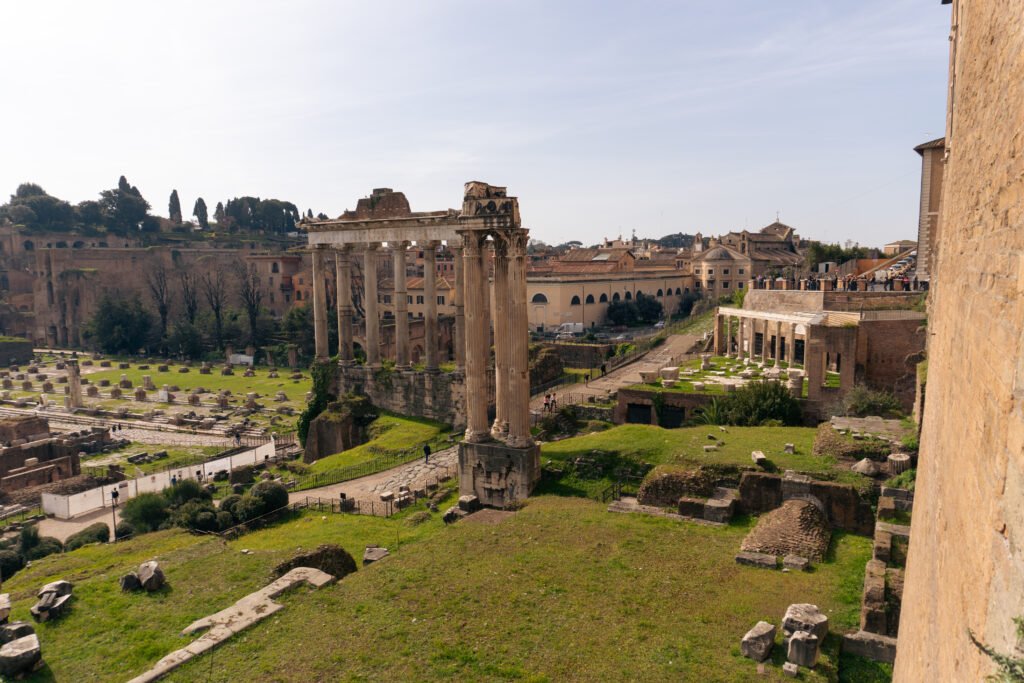
Entering near the Arch of Titus gives you a clear view across the whole site. The path leads past the Temple of Venus and Roma and then drops you into the heart of the Forum, where the Temple of Saturn, the Curia where the Senate met, the House of the Vestal Virgins, and the Arch of Septimius Severus each tell a different part of Rome’s story.
Travel tip: I booked the Forum ticket that includes the Super Sites, which gives access to several additional archaeological areas that are normally closed or limited. These include places like the House of Augustus, the House of Livia, the Temple of Romulus, and other restricted sections inside the Forum and Palatine Hill. If you want a deeper look at the site’s most important structures, this version of the ticket is worth it.
The Forum looks compact on a map, but once you’re inside it opens into a wide network of ruins and uneven stone paths. I took my time moving through the main areas, stopping often to read signs, look closely at architectural details, and let my brain catch up with the sheer amount of history concentrated in one place. It is not a site you want to rush, especially if you are traveling slowly or managing your energy.
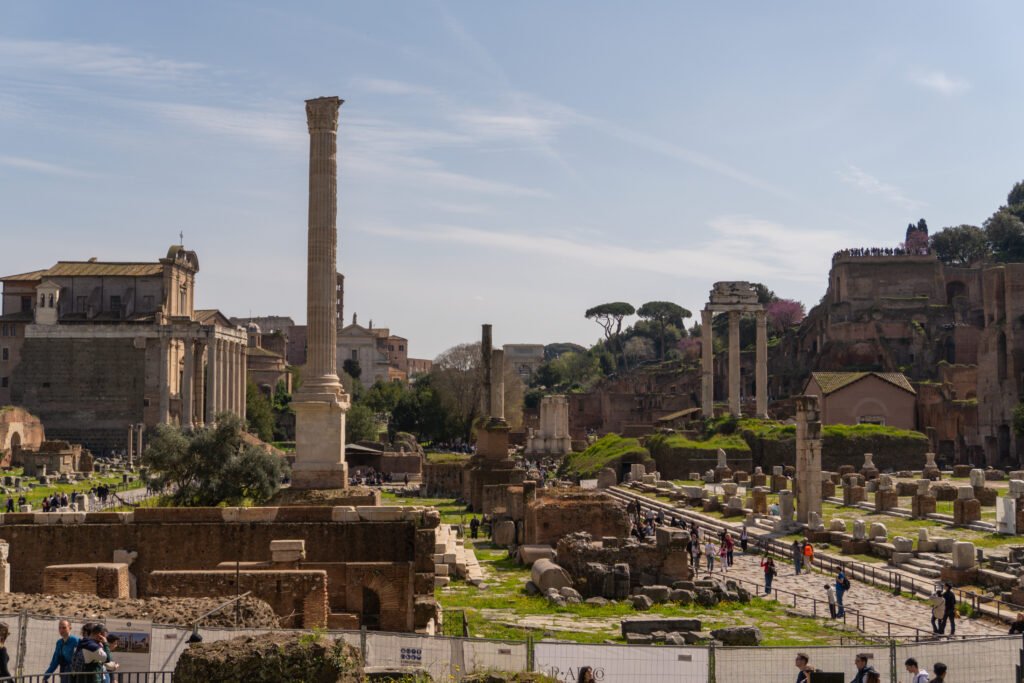
If you can, give the Forum its own day. It usually closes around 4pm, and trying to squeeze it in after the Colosseum makes the experience feel rushed instead of meaningful.
Travel tip: Many sections have uneven ground, steep grades, and ancient paving. Wearing compression socks and comfortable running shoes is highly recommended. Do not wear sandals. There is also a café inside the Forum, so take breaks and drink plenty of water.
Palatine Hill
Palatine Hill is where Rome’s story turns from myth into power. According to legend, this is where Romulus founded the city. In reality, it became the most exclusive address in ancient Rome, home to aristocratic families long before the emperors arrived. By the imperial period, the hill had developed into a vast palace district. Augustus lived here, Tiberius expanded it, and Domitian rebuilt it into a residence so large that the word “palace” comes directly from Palatium.
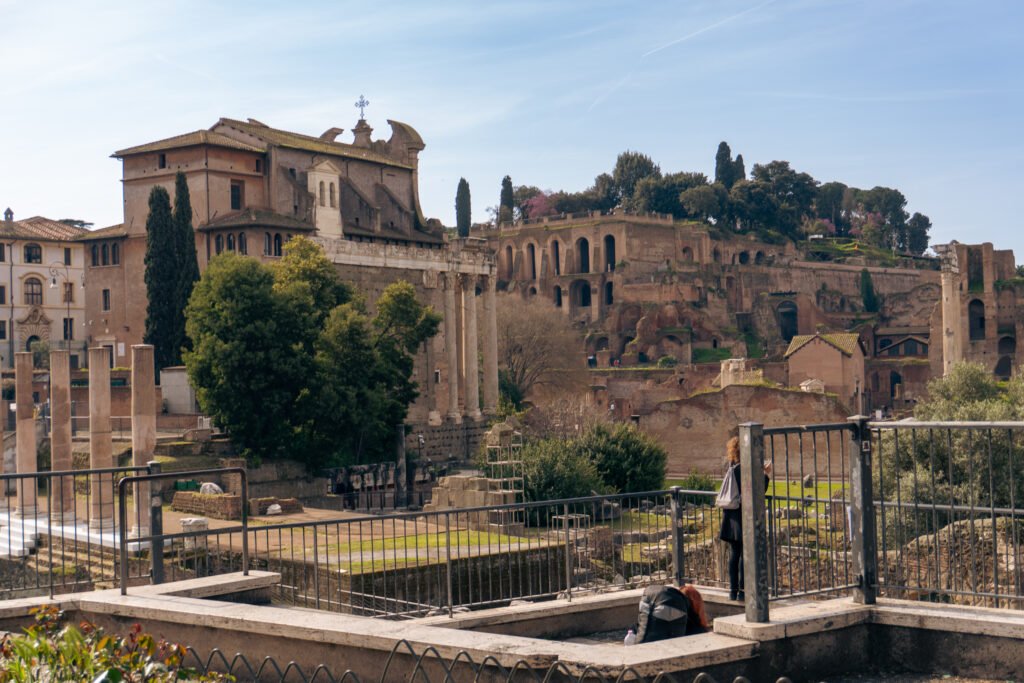
Walking up from the Forum, the atmosphere shifts immediately. The noise drops away and the ruins stretch across gardens, terraces, and open spaces that feel completely different from the dense architecture below. You can still see the remains of the Domus Augustana and Domus Flavia, the private and public wings of the imperial palace, along with long bands of brickwork that once supported grand halls and courtyards.
I moved slowly through the site, stopping often to take in the views. From the top you get one of the best panoramas in Rome: the Forum on one side, the Circus Maximus on the other, and the city spreading out in every direction. It’s easy to understand why Rome’s elite chose this hill. Even in ruins, it feels elevated in every sense.
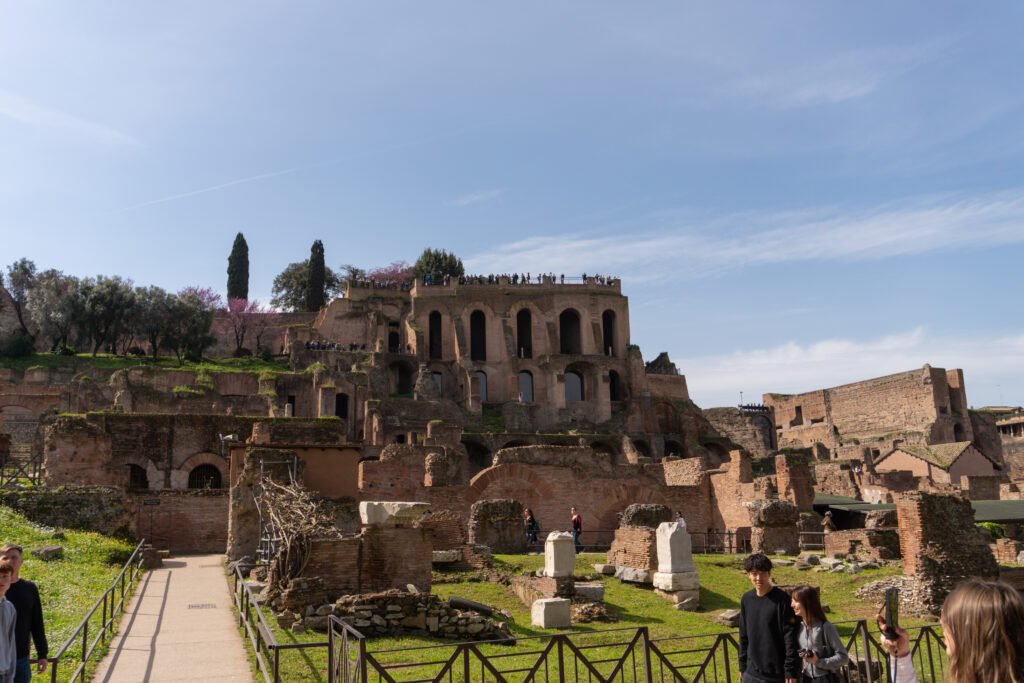
Palatine Hill is larger than it appears, and the paths can be uneven, so pacing matters here just as much as it does in the Forum. If you are traveling slowly, give yourself time to wander between the major structures and the quieter garden areas. It is one of the most peaceful archaeological spaces in the city, and rushing through it would miss the point entirely.
The Pantheon
The Pantheon was built as a temple to all the Roman gods, originally under Marcus Agrippa around 27 BC and then rebuilt by Emperor Hadrian between 118 and 128 AD after the first version burned down. Its dome is still the largest unreinforced concrete dome in the world, which is genuinely hard to comprehend when you are standing beneath it. The engineering is so precise that the structure has survived nearly two thousand years of earthquakes, storms, and everything Rome has thrown at it.
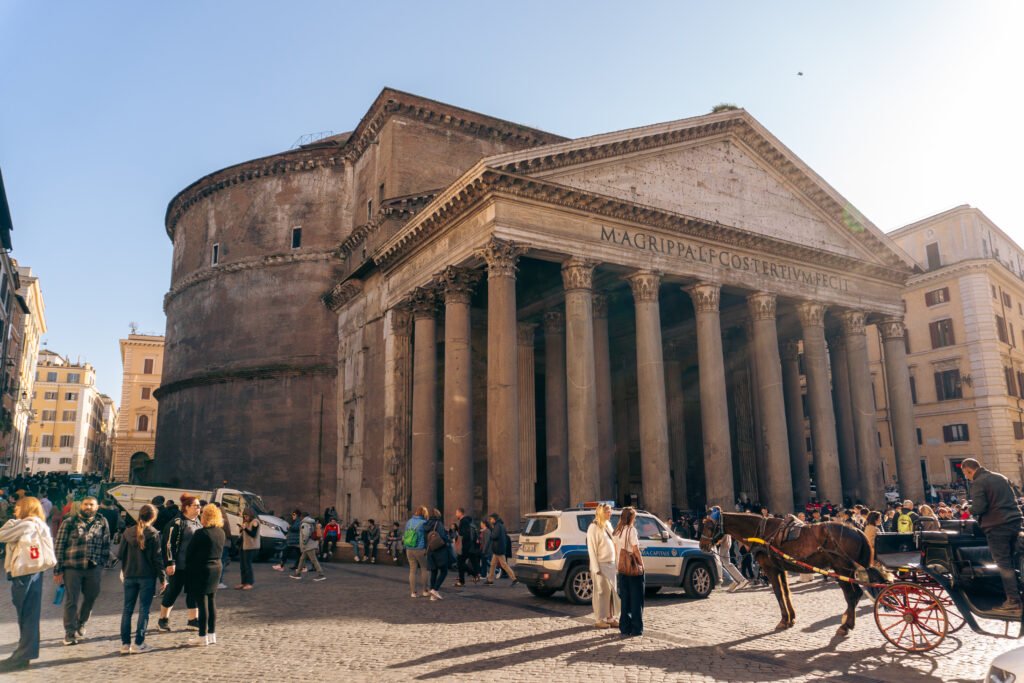
It is also one of the busiest places in the city. Crowds pack in tight and the noise builds quickly. After touring the interior, I could feel myself getting overstimulated from the day, so I stepped back outside and sat in the piazza for about an hour. I didn’t do anything structured. I watched the fountain, listened to the street musicians, and let myself settle.
That hour ended up being one of my favorite memories from Rome.
Travel tip: You do not have to see every corner of every site to have a meaningful visit. Sometimes sitting in the piazza is the whole point.
Rome has been standing since 753 BC. It is not going anywhere, and neither are the ruins, the piazzas, or the museums. You are allowed to slow down, sit in a piazza for an hour, or split your tickets over two days. The history will still be there.
If leaving your comfort zone to travel is tough – I got you, here are 8 Travel Essentials to Soothe Anxiety and Sensory Overload While Sightseeing in Europe